
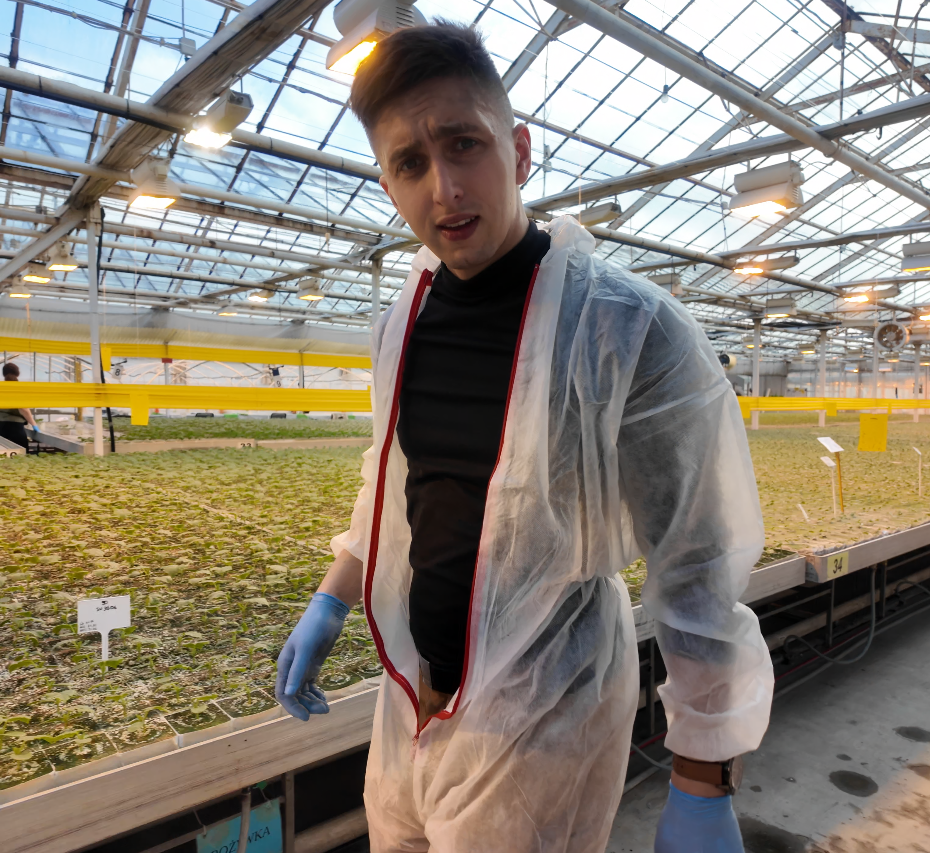
Innovation in protected agriculture is gaining momentum! As part of the pilot testing of the Planter system, we have begun research at one of the largest greenhouses in Poland. We are testing the Matrix Sensor —a spatial measurement system that allows for precise monitoring of the microclimate of crops.
Where and how are we testing?
The site of our tests is a modern greenhouse with an area of 0.3 hectares and a height of 4 meters, equipped with a shading system and modern climate control technologies. Thanks to the Sensor Matrix, we are conducting detailed measurements of air temperature and humidity in various zones:
- At the plant roots – to monitor conditions in the root zone, which are critical for proper water and nutrient uptake,
- At the growing tip – to verify that plants are receiving optimal conditions for growth,
- Above the plants – where uncontrolled temperature spikes may occur,
- Above the shade structures – to analyze the impact of shading on internal conditions.
Technology that makes a difference
Sensor Matrix is a system consisting of smart sensors that communicate wirelessly using LoRa technology. This makes it possible to collect data from a large greenhouse area without the need for complex wiring. Additionally, the sensors are miniature and energy-self-sufficient, as they use micro-solar panels for power.
Every half meter, the sensors take vertical measurements, creating a precise map of the greenhouse climate. The data is immediately transmitted to the Planter System app, where it can be analyzed in numerical form, on graphs, and (soon) in the form of interactive 3D maps.
Initial results – what do we know so far?
Real-world testing has yielded the first interesting results:
- The Planter System’s measurement data is extremely precise and matches the data provided by the large and complex climate computers and classic mercury thermometers used in our partner’s crops.
- Installing one measurement point took one person 15 minutes. No access to power infrastructure was required. A ladder was necessary.
- Temperature differences between the plant level and the space above the shade screens are clearly noticeable, which can affect the intensity of transpiration and can be utilized for efficient air mixing within the facility.
- Humidity in the root zone remains stable, but there are humidity spikes in the upper air layers, which can lead to condensation issues and fungal diseases.
- Microclimatic differences between individual greenhouse sectors may suggest the need for local regulation of ventilation and shading.
- We see a need to correlate spatial microclimate data with additional sensors: pH, EC (of water and mineral blocks), solar energy (at the leaf level along with the specifics of this energy, i.e., the wavelengths reaching the plants), and root water weight.
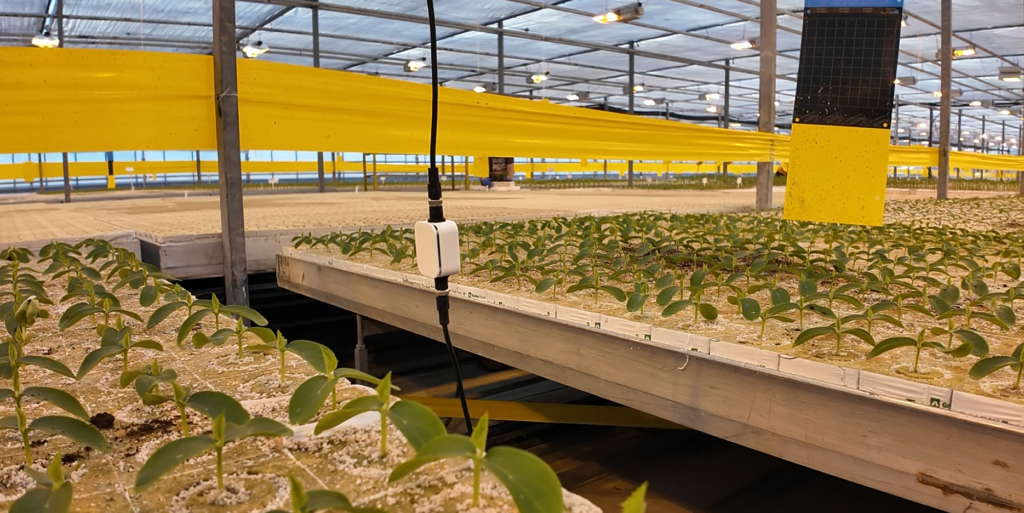
The Sensor Matrix is used for spatial microclimate measurements with unprecedented precision
What’s next?
The current tests are just the beginning! The next stage will involve analyzing the impact of dynamic climate changes on plant growth and yield, as well as integrating the data with a plant stress prediction module. This will allow us to predict even more accurately how changing conditions affect crops and how to optimize greenhouse management.
Will Sensor Matrix change the way we manage climate in greenhouses? Everything points to yes! Follow our blog to stay up to date on the results of upcoming tests. 🚀